
Description
Product Overview
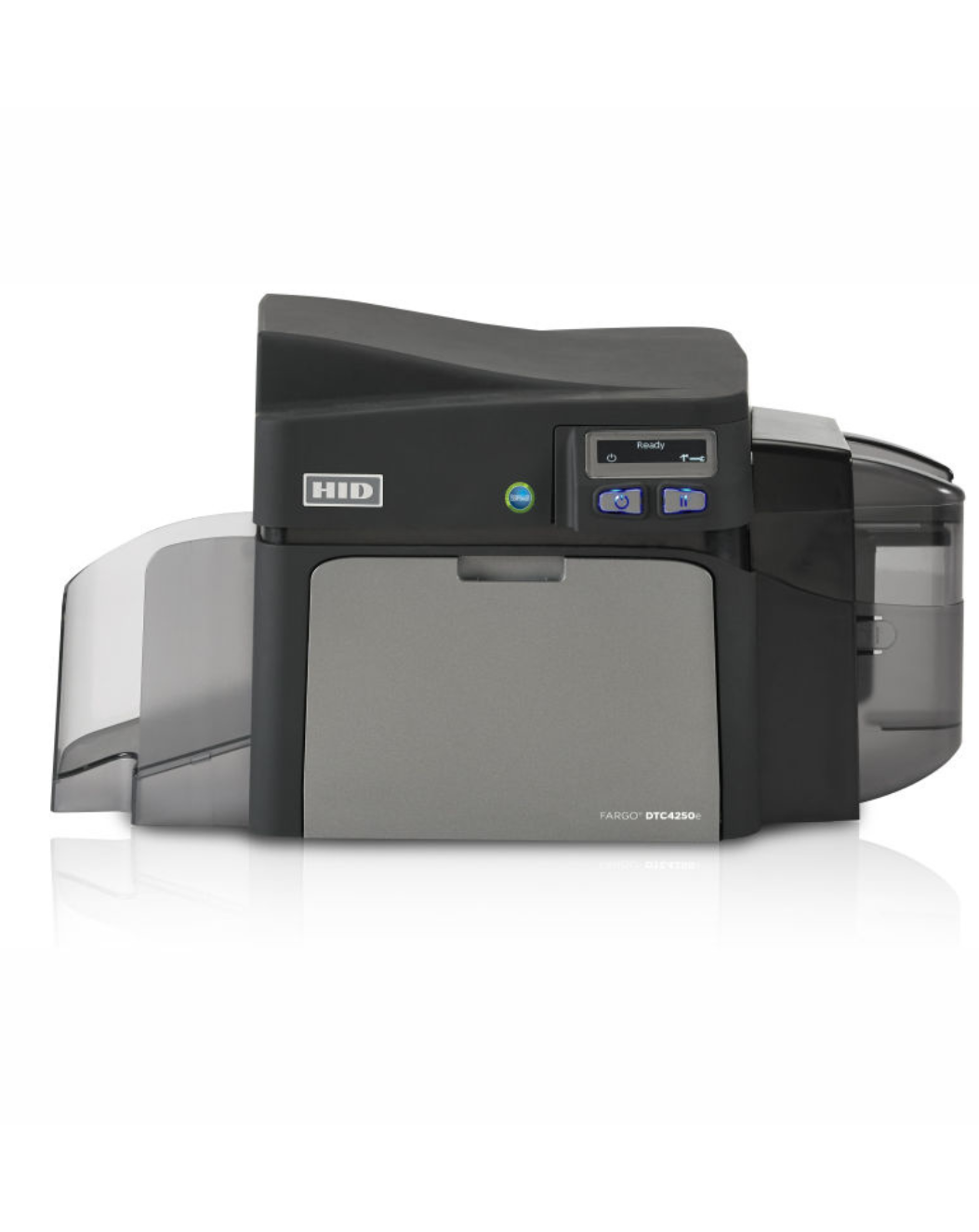
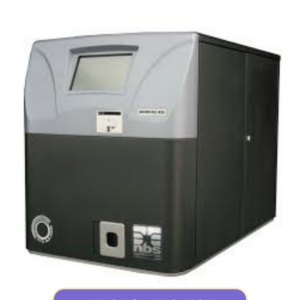
The dual-sided DTC1250e answers the most common reason organisations outgrow their first card printer: they run out of room on the front of the card. Company policy text, a magnetic stripe panel, a barcode, emergency contact details and Arabic translations all compete for space that a single face cannot provide.
This model prints both sides automatically. The card is printed, flipped internally and printed again without operator intervention, so a two-sided batch runs unattended exactly like a single-sided one.
Everything else matches the single-sided model – the same 300 dpi dye-sublimation engine, the same 100-card hopper, the same Swift ID software and FARGO Workbench utilities. Adding encoding turns it into a complete credential system: magnetic stripe for time-and-attendance, or contactless smart card encoding for door access, written during the same pass that prints the card.
For most UAE businesses issuing staff badges with any regulatory or policy text on the reverse, the dual-sided model is the practical choice. The AED 700 difference over the single-sided version is usually recovered in the labour saved reprinting cards by hand.
Specifications
| Print method | Dye sublimation / resin thermal transfer (direct-to-card) |
|---|---|
| Resolution | 300 dpi |
| Print speed | 16 seconds per card / up to 225 cards per hour (YMCKO, single side) |
| Print sides | Dual-sided, automatic |
| Card sizes | CR-80, CR-79 adhesive back |
| Card thickness | 9-40 mil (0.229-1.016 mm) |
| Input hopper | 100 cards |
| Output hopper | 30 cards |
| Interfaces | USB 2.0; Ethernet with internal print server; optional Wi-Fi |
| Encoding options | Magnetic stripe; contact and contactless smart card |
| Security | AES-256 encryption |
| Software | Swift ID embedded badging; FARGO Workbench |
| Warranty | 2 years standard; 3 years with online registration |
FARGO Model Comparison
| Specification | DTC1250e | DTC4500e | HDP5000e | HDP6600 |
|---|---|---|---|---|
| Technology | Direct-to-card | Direct-to-card | Retransfer | Retransfer |
| Resolution | 300 dpi | 300 dpi | 300 dpi | 600 dpi |
| Colour speed | 225 cards/hr | 225 cards/hr | 133 cards/hr | 230 cards/hr |
| Edge-to-edge print | Small white border | Small white border | Over-the-edge | Over-the-edge |
| Card thickness | 9-40 mil | 9-40 mil | 30-50 mil | 30-40 mil |
| Input hopper | 100 cards | 200 cards | 100 cards | 100 cards |
| Output hopper | 30 cards | 100 cards | 200 cards | 200 cards |
| Lamination | Not available | Optional | Optional module | Wasteless lamination |
| Smart-card printing | Not recommended | Supported | Excellent | Excellent |
| Printer warranty | 3 yr (registered) | 3 yr | 4 yr | 3 yr |
| Best suited to | Small offices, schools | Daily mid-volume issuance | Smart cards, universities | High-volume enterprise |
Frequently Asked Questions
What is the difference between the single-sided and dual-sided DTC1250e?
The dual-sided model prints both faces of the card automatically in one pass. The single-sided model prints one face only. The print engine, resolution and speed are otherwise identical.
Can a single-sided DTC1250e be upgraded to dual-sided later?
No. On the DTC1250e the dual-sided mechanism is built in at manufacture and cannot be retrofitted. If you expect to need two-sided cards, buy the dual-sided model from the start.
How long does a dual-sided card take to print?
Roughly double a single-sided card, since both faces are printed in sequence. Expect around 30 to 35 seconds per full-colour dual-sided card.
Does it encode access-control cards while printing?
Yes, when specified with an encoder. Magnetic stripe or contactless smart card data is written during the same pass that prints the card, so one operation produces a finished credential.
Which ribbon should I use for dual-sided cards?
Use YMCKOK for full colour on both faces, or YMCKO if the reverse only needs black text. YMCKO is significantly cheaper per card and covers most staff-badge designs.
Reviews
There are no reviews yet.